
Jetstar is recognized for initiating sale fares throughout its network approximately every couple of months. Recently, I was fortunate enough to secure one of their sale fares to Bangkok; however, there are some complexities involved.
I have been contemplating a trip to Asia for an extended period, primarily to address some dental work. With the recent fare availability to Bangkok, I viewed this as an opportune moment to revisit Thailand, particularly since my previous visit was limited by the intense heat. Nevertheless, I am prepared to endure similar conditions as I did during my journey to Japan, and I possess a clearer objective this time compared to my earlier visit.
Returning to the topic of Jetstar, I encountered a rather unusual arrangement when booking this route; the return journey necessitates a transit through Perth. Although the majority of flights available for sale were on this route, there were also direct flights that were quickly sold out during the member day sale, thereby leaving me with the transit option. The flight from Melbourne to Bangkok will be direct, operated by their Boeing 787, while the return journey will be conducted by the Airbus A321neo for both legs.
For my flight to Bangkok, I opted for a seat in the forward cabin upon discovering that it offers superior legroom compared to the rear cabin. The reviews for row 10 have been particularly positive; therefore, I selected seat 10J for this journey. The additional cost of AUD$56 for this seat is a worthwhile investment considering the substantial legroom it provides, given the length of the flight.
The return flight will also be operated by the A321neo, transiting through Perth. For the first leg of this journey, I have chosen seat 27F, as there is no adjacent seat behind me due to a crew seat being located there. Regrettably, I was unable to board the A321neo from Perth to Melbourne as I missed the connection for that flight, resulting in a rebooking with Qantas instead.
CHECK IN
Online check-in is available 48 hours prior to departure. After completing the online check-in process, passengers have the option to save their boarding pass in PDF format or receive it via text message, which can then be stored in a mobile wallet (such as Apple Pay, Google Pay, etc.). It is important to note that receiving the text message is not necessary, as passengers will have the ability to save the boarding pass on the subsequent page of the website, even if they are overseas without roaming capabilities. This feature was not available during my previous travels with the airline in 2023, a limitation that may have been due to the specific route or advancements in their system. While this might pose a challenge for individuals who are less tech-savvy, the PDF option remains largely an industry standard and serves as a commendable compromise.
Upon arrival at the airport, I proceeded to the check-in machine to print the baggage tag and subsequently dropped off my bag at the self-service machine. Although there was a brief queue while I printed my baggage tag, I encountered no more than a 10-second wait for a machine to become available.
During the return leg of my journey, the flight experienced a delay of two hours, which was communicated via email in the afternoon. However, there was no information provided regarding the operating hours of the check-in counter. As I was transiting from another delayed flight, I was concerned that I might miss the check-in period if the original flight schedule was adhered to. Consequently, I hurried to the check-in counter with only five minutes to spare, assuming it was functioning according to the original timetable. Upon my arrival, the staff inquired if I was aware of the flight’s delay. I confirmed my awareness, to which they responded, “You still have two more hours.” This led me to wonder whether Jetstar had adjusted the check-in timeline in light of the late arrival. This pertinent information was not included in their email notification. I encountered a similar issue with VietJet, necessitating my hotel to contact them on my behalf, resulting in clarification that the check-in time remained consistent with the original itinerary.
BOARDING
The boarding gate at Melbourne Airport is situated on the lower level, while the waiting lounge is located on the middle level. Unaware of the waiting lounge’s position below, I accompanied the crew down to the gate, where the gate agent informed me to return upstairs to the waiting area. Although there is a small waiting zone available on the lower level, it is designated solely for individuals with disabilities who require priority boarding. I observed numerous passengers proceeding downstairs as the boarding time approached, which contributed to the confusion; therefore, it would be advisable to install signage or have staff members in position to provide clearer directions.
As boarding commenced, the first group permitted to board consisted of the first 12 rows, including both Business Class and the front economy cabin. Being seated in row 10, I had the opportunity to board alongside the Business Class passengers.
On the return journey, considering the aircraft was a narrow-body model, priority boarding was allocated to rows 1 and 2, as well as the emergency exit row. Subsequently, general boarding proceeded from the rear to the front of the aircraft.
SEAT
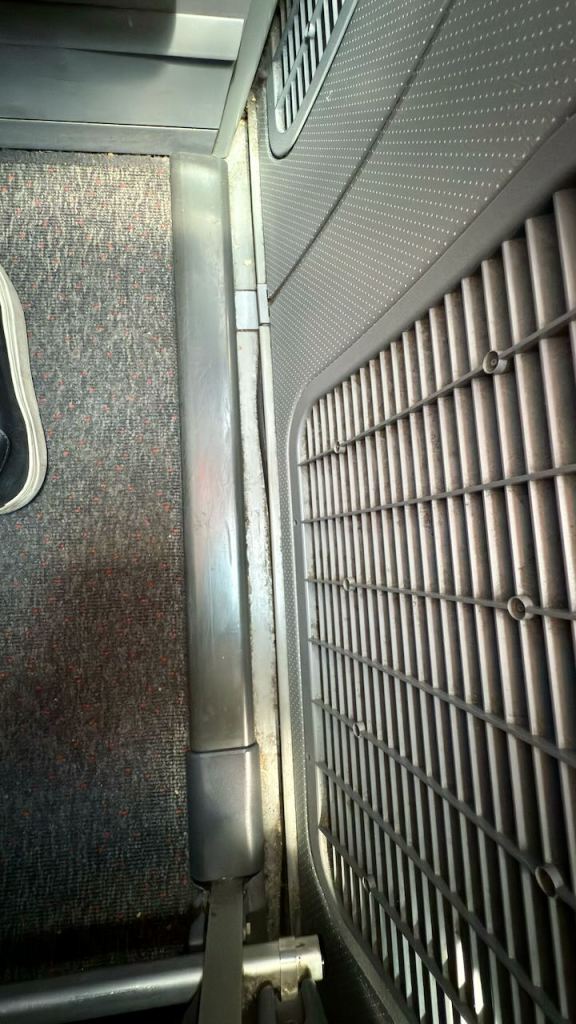
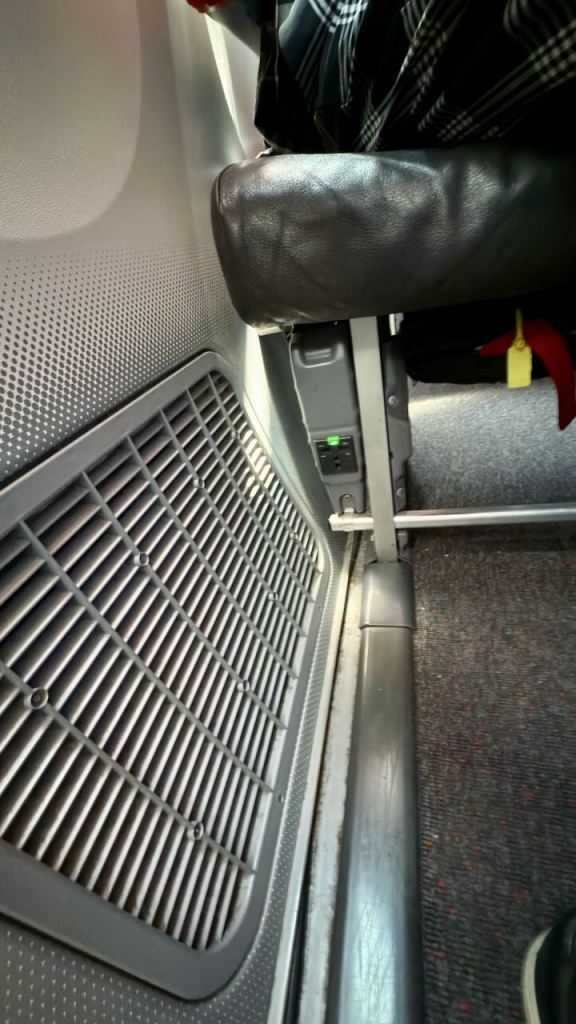

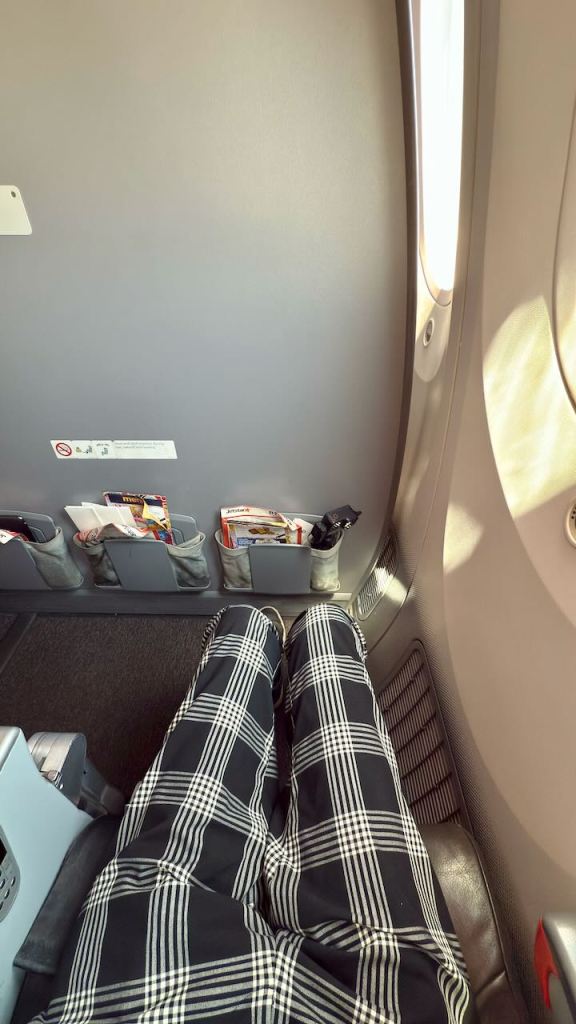
On the Dreamliner, Row 10 is a bulkhead seat situated directly behind the Business class section. I now comprehend the reasons behind the enthusiastic reviews regarding this row of seats, primarily due to the ample legroom provided, which is particularly beneficial for long-haul flights and individuals with longer legs, such as myself. I was even able to fit my backpack in front of me while still feeling sufficiently comfortable.
The seat is equipped with an in-flight entertainment (IFE) system; however, an additional fee is required to access it, which I opted not to pay. There is a remote control located on the side to manage the IFE, as well as to activate or deactivate the lights and signal the crew. Additionally, there is a storage pouch at the front, which offers enough capacity to accommodate a laptop. Beneath the seat, one can also find a universal power adapter, which functioned effectively for my needs. I appreciate the availability of at least one amenity that does not incur additional charges, unlike certain low-cost carriers.
Individuals seated in 10C or 10G should be aware that they may experience disturbances as the crew navigates through the aisle, making it less than ideal. However, these seats do offer superior legroom, as the bulkhead extends only slightly beyond the middle seat.
The tray table is bi-fold, a feature that proves advantageous when only a beverage is required or when additional space is needed without fully extending the tray.
Regrettably, my seat neighbor was quite restless during the initial hour of the flight, often encroaching into my personal space, which was rather uncomfortable.
While sleeping in this seat is not optimal, it is an improvement compared to other seats located in the rear. I attempted to utilize the gap between the wall and the bulkhead as a means to adjust my leg position, but it was not particularly comfortable. Nonetheless, the storage compartment, with its mesh sides providing slight leg support, was somewhat effective, and I managed to obtain a brief amount of rest before being awakened by the lights signaling meal service.
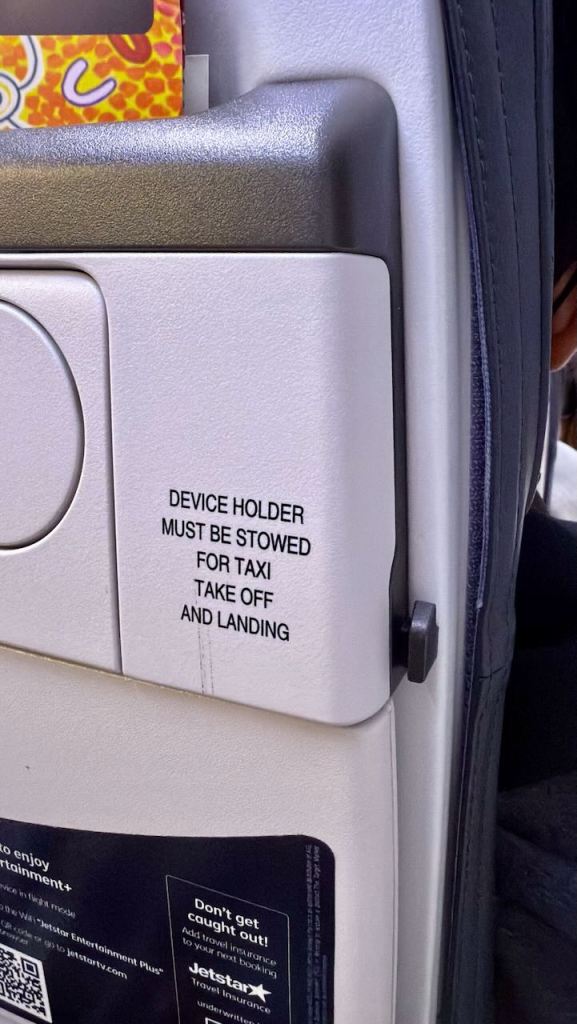
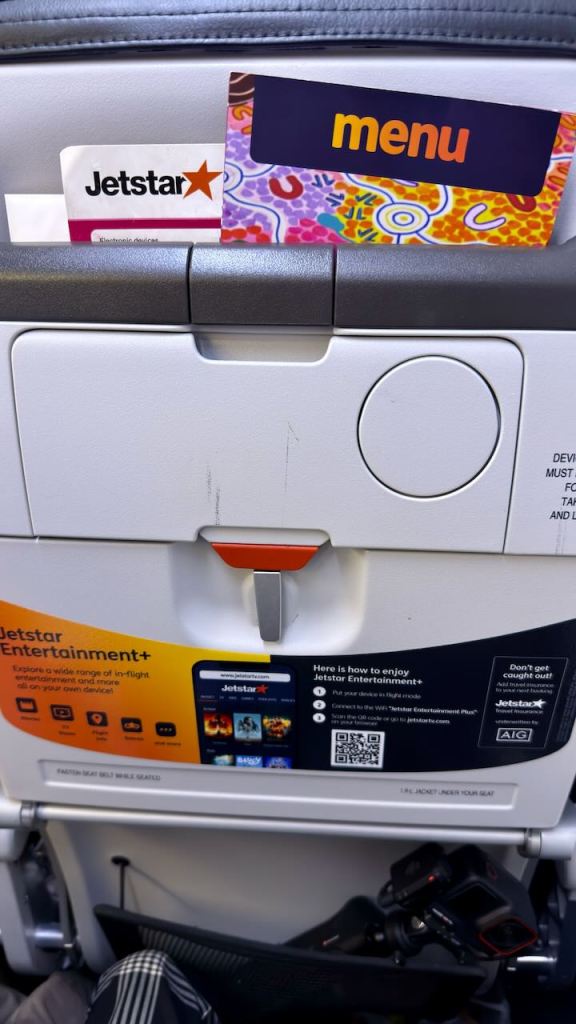
While on the A321neo, I selected seat 27F, as the seat map indicated that there would be no seat directly behind me, allowing me to recline immediately after takeoff. However, this turned out to be partially accurate; there is actually a wall located behind the seat for the cabin crew. Although the seat does not present a fully limited recline situation, as it does not recline significantly, it does become somewhat noisy due to the crew’s movements and their use of phones. Additionally, the absence of a headrest on the A321neo makes it quite challenging to achieve restful sleep. Even with the use of my neck pillow, I found it difficult to prevent my neck from leaning off to the side.
One positive aspect of this seat design is the inclusion of a small pull-out tray, which accommodates electronic devices and features a cup holder, negating the need to utilize the larger tray table. This provides a modest increase in space and allows for greater mobility. I wish that more aircraft seats incorporated this feature; however, a disadvantage is the presence of only a USB port for charging devices, with no universal power outlet available.
IFE
If one decides to utilize the In-Flight Entertainment (IFE) system, payment must be made during the booking process or at the point of use onboard. A preliminary review of the available movies and television series reveals a selection of relatively recent films, though they are predominantly a few months old. Among the television series, there are noteworthy titles such as “Tracker” and “The Cleaning Lady”; however, the system does not specify which season is available, despite the existence of multiple seasons for these shows.
Regarding complimentary offerings within the IFE, passengers may enjoy a limited array of tourism promotion videos, alongside information about the aircraft and seating arrangements. Additionally, access to a static flight map is provided, which, while not particularly advanced, suffices to convey information about the current flight status, including altitude and location.
The user interface of the screen is lacking in responsiveness, necessitating multiple taps to navigate effectively. Further complicating the experience, the reading light inadvertently activates upon screen interaction, despite the control for this feature being located in a discrete position. While it is understandable that a budget carrier may not offer the same quality as esteemed airlines such as Emirates or Singapore Airlines, it is reasonable to expect a certain level of investment in the IFE system. Enhancing the software and overall functionality could potentially incentivize passengers to opt for additional payment, motivated by value rather than mere necessity for in-flight entertainment.
On the A321neo, access to entertainment is facilitated through in-flight Wi-Fi, although it should be noted that there is no option for Wi-Fi connectivity, as the absence of a seatback monitor limits entertainment access to this single method.
LAVATORY
There is a lavatory located just behind my section, specifically after the row behind me. Upon needing to utilize it, I found myself waiting for approximately ten minutes for two individuals to exit, in addition to one person who was already inside. I observed several individuals entering and exiting the Business Class section; however, I am uncertain if they were indeed using the Business Class lavatory. It was evident that a gentleman from Business came to use the Economy lavatory, which raises questions regarding this behavior, particularly as numerous Economy passengers were attempting to access the limited number of lavatories available onboard, while a dedicated lavatory for Business Class serves merely around twenty passengers.
When I eventually gained access, I noted that the floor was quite wet and the toilet was unpleasantly odorous. Given the circumstances, it is understandable that the crew might lack the opportunity to clean the facilities promptly between passenger uses. I sincerely hope that they attend to cleanliness during any breaks that may occur.
As for the amenities, there is little to report aside from Qantas branded hand soap, some hand towels, and cups available for dental hygiene purposes.
I did not utilize the lavatory on the A321neo, and therefore, I cannot provide commentary on its condition, amenities, or spatial arrangement. Nevertheless, I can surmise that accommodating over 200 passengers with only three to four toilets is likely to lead to less-than-ideal conditions.
MEAL SERVICE
There is a comprehensive menu available onboard featuring a variety of snacks, meals, and beverages that can be purchased. While my fare included a meal, I opted to defer it to the second service. During the initial meal service, I selected a vegetable noodle soup, priced at $8, which is reasonably moderate yet not the most economical option. Unfortunately, the water was not filled to the recommended level, resulting in a notably salty soup by the time the noodles were fully cooked. Furthermore, the portion size was rather limited; therefore, I would strongly advise bringing additional food onboard to avoid the expense of overpriced in-flight meals.
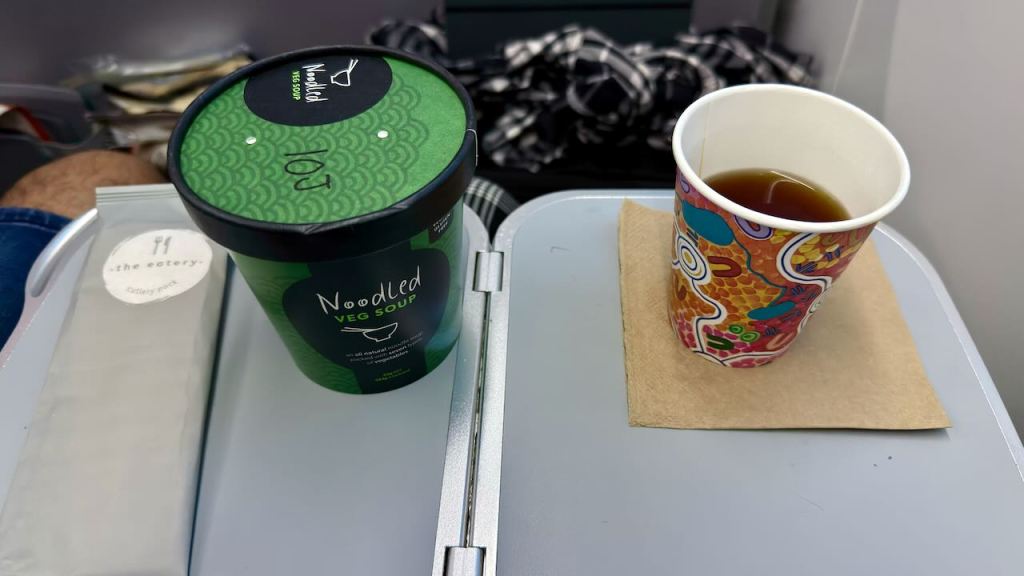
Jetstar offers a commendable selection of vegetarian and gluten-free options, which is a notable advantage; in contrast, my experience with other low-cost carriers such as AirAsia was less favorable. While I intended to fly with AirAsia, I found that their pre-purchase meal options did not include suitable choices for a vegetarian, particularly for someone who cannot tolerate spicy foods.
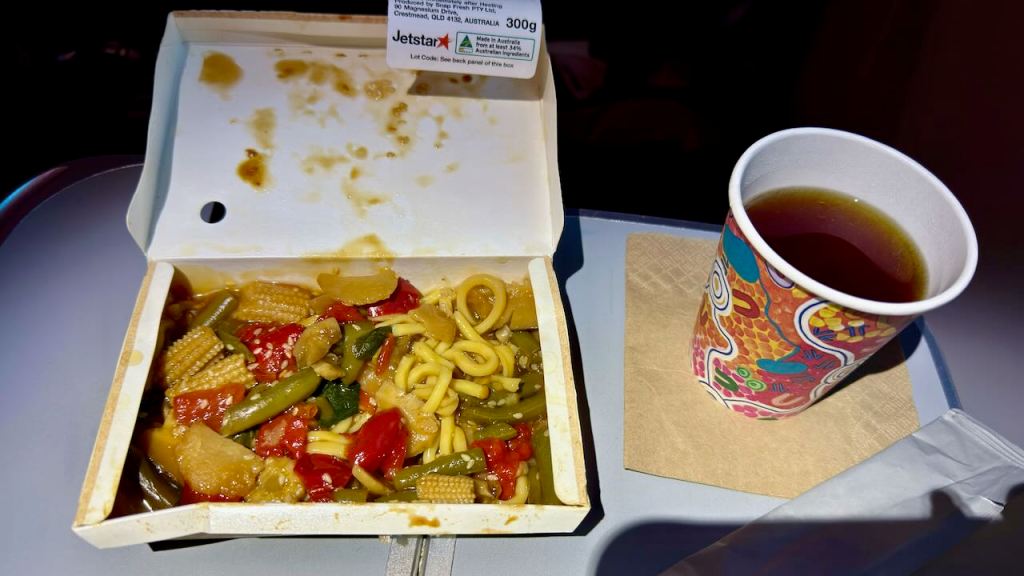
4.5 hours into the flight, the second meal service commenced, and we still have an estimated 3.5 to 4 hours remaining. It is unclear why the second meal service began so early, as it is typically scheduled two hours prior to landing. As previously mentioned, I selected the teriyaki noodles; however, the sauce proves somewhat bland, which is likely due to diminished taste sensitivity, and I usually consume mild flavors, so it does not greatly concern me. The dish features an abundance of vegetables, which is commendable; nonetheless, my primary concern lies with the noodles. I am uncertain whether the texture issue is attributable to the specific type of noodle used, Hokkien noodles in this instance, or if it is a result of prolonged exposure to the sauce, which renders them somewhat mushy and lacking in the expected texture of noodles. Upon examining the label, I noted that the dish is prepared in Queensland; consequently, it must be air-freighted to Melbourne and stored for a minimum of one day after cooking prior to boarding the aircraft. If the noodles have indeed been soaked for an extended period, this could adversely affect their texture. Additionally, the portion size is relatively small; thus, for those with hearty appetites, it may prove insufficient, and I would likely require an additional small snack, such as cake, to achieve a more satisfactory level of fullness. In conclusion, I would assign this meal an average rating, as there is considerable room for improvement. It is unclear whether this meal underwent adequate testing prior to its inclusion on the menu, as it does not appear that such assessments were conducted.
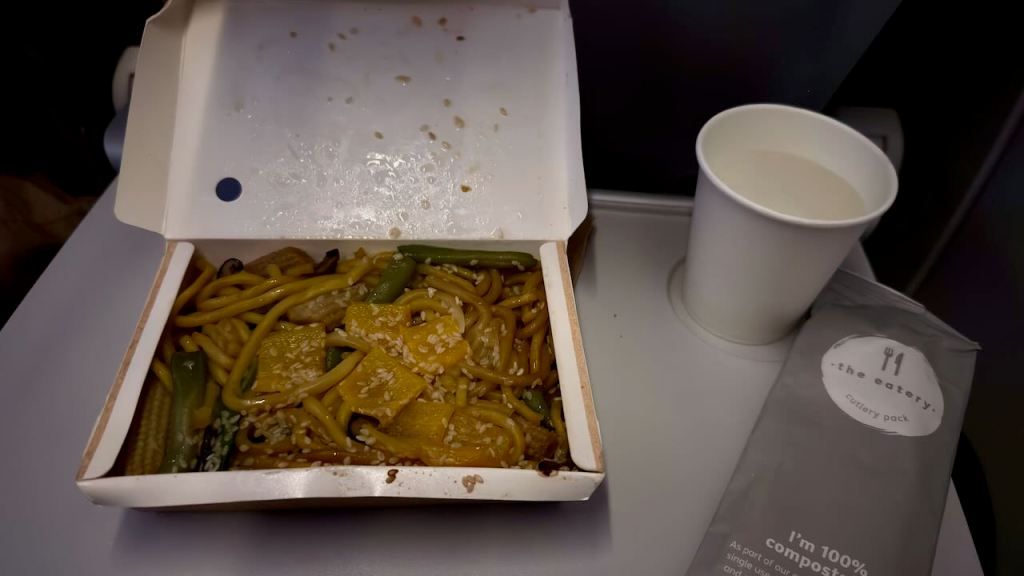
On the return leg of the journey, the meal service commenced 30 minutes after takeoff. However, due to the configuration of a single aisle, the service took slightly longer than anticipated. I chose to utilize a meal voucher instead of pre-booking a meal, as I was uncertain regarding my appetite. Consequently, I had to wait for the crew to return for a second round after the pre-booked meals, resulting in an additional 30 minutes before I received my meal. It is my understanding, based on my experience during the outbound flight, that beverages are not included unless a pre-booked meal option is selected.
The noodles served on this flight were notably superior in texture compared to those from Melbourne, though the accompanying sauce was comparatively bland, a characteristic with which I have no issue. Due to fatigue, I promptly retired to sleep after my meal; unfortunately, the crew did not come to clear the trays (or at least did not do so prior to my falling asleep). This resulted in my having to leave my tray on the table for the remainder of the flight until just before our arrival, which proved uncomfortable, particularly given the already limited space and the extension of the tray table.
Some passengers elected to consume their meals prior to landing, and the crew distributed these approximately 90 minutes before landing while the cabin remained predominantly dark. The remainder of the passengers did not receive any further service, as there was only one meal service opportunity on this flight.
CONCLUSION
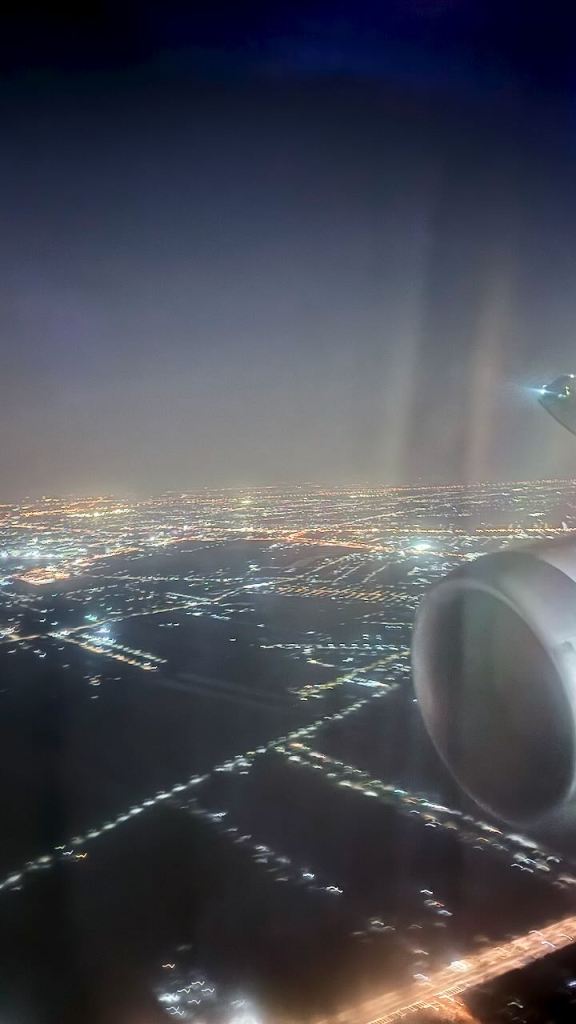
Jetstar is a no-frills airline, and as such, many services incur additional charges. The check-in process, in my experience, is efficient and straightforward, and the demeanor of the staff was generally acceptable. However, the delay we experienced was disappointing. It would have been beneficial to have personnel available at the boarding gate to assist passengers, as no staff was present at the counter. Moreover, including check-in times in the delay notifications would have alleviated confusion regarding when check-in would close, allowing for a more relaxed approach to reaching the check-in counter.
The in-flight meals are not substantial; therefore, I recommend bringing personal snacks to circumvent the high prices of onboard meals. However, the selection offered is notably better than that of some other low-cost carriers, particularly in terms of catering to dietary requirements.
If you can secure a favorable deal, it may be worthwhile to endure certain inconveniences to reach your destination at a lower cost. Additionally, if you are taller, purchasing extra legroom seats could be advisable, as standard seating on low-cost carriers typically offers limited legroom.
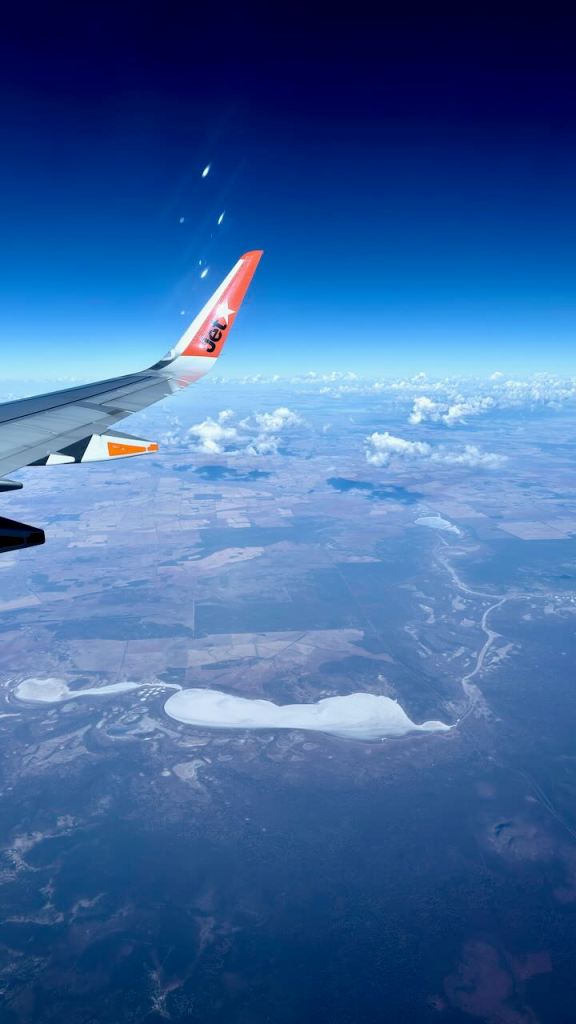
Another advantage of Jetstar is its affiliation with the Qantas frequent flyer program, which allows passengers to earn and, in the near future, redeem flights or upgrades using Qantas frequent flyer points. This feature presents significant value for travelers seeking advantageous fare options. Furthermore, in instances of missed flight connections or considerable delays, Jetstar may facilitate transfers to Qantas flights, thereby enhancing the value of your existing fare. For insights into my experience with Qantas, you are invited to visit my blog.

 PackJetRoam
Leave a comment