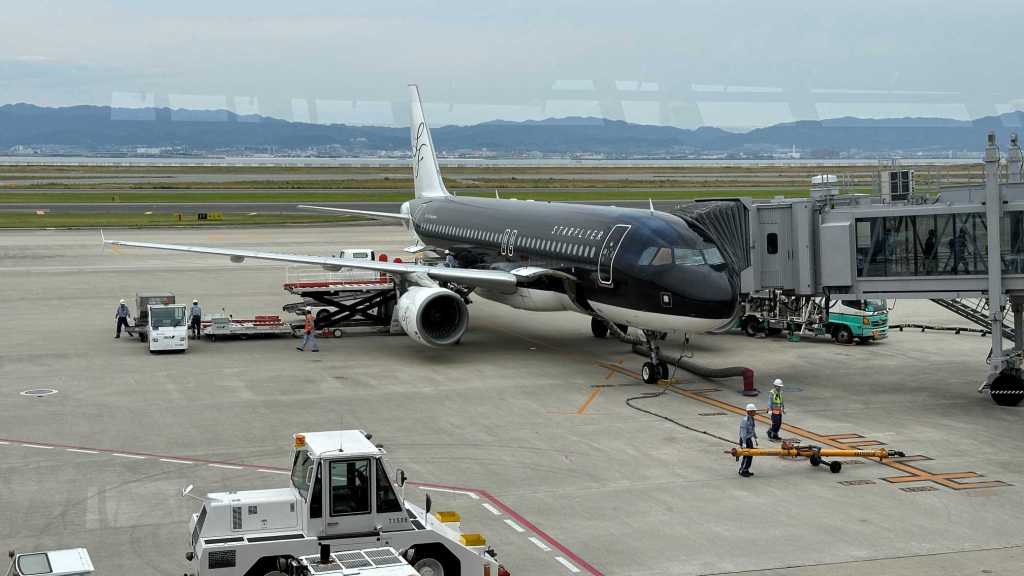
Star Flyer has been around for over 20 years in Japan, inititally named Kobe Airlines, with a formation with an alliance with ANA in 2005. Star Flyer is a hybrid airline offering low cost fare while providing better service.
Star Flyer doesn’t have a vast network internationally, with only Taipei being the only current international destination as of writing, while they have 2 bases in Japan (Haneda and Kitakyushu), with 4 other domestic airports being in their network.
Star Flyer currently operate 10 Airbus 320-200 and 1 Airbus 320 neo, with 5 additional on order to replace their current fleet. Their A320-200 are fitted with 150 economy seats, offering 34″ (86cm) of pitch while their A320 neo has 162 seats. This makes Star Flyer one of the most generous and comfortable airline to fly with, as this aircraft can fit 180 seats easily.
CHECK IN
There is a dedicated space for Star Flyer passengers to check in at section A of Terminal 1 at Haneda Airport. It was slightly confusing at first as their website stated that we can only use security checkpoint A but did not mention where their check in desk are located, nor was there any information on the departure board, but their counter is located next to the checkpoint, simply look up for the big alphabet and go to A.
Once you have completed your check in, you will have to collect your baggage again to do a security screening which is also located right next to the check in area, it takes a minute if there is no queue and you will be able to head into airside, given the efficiency of Japanese airport you are only required to pass thorugh airside at least 20 minutes prior to departure. Do be aware the gate is about 5-10 minutes walk depending on your pace, and you do not want to be late to the gate as they are very puncture.
There are no retail or food outlets on that side of the terminal as well, so if you want to grab a bite, you may want to research prior as there might not be suitable options on the airside or it could be on the complete opposite end of the terminal.

FLIGHT
Today’s flight from Haneda to Kansai is 70 minutes, 5 minutes prior to departure they have shut the aircraft door and 2 minutes prior to departure they started the pushback. Again, don’t be late because the Japanese do not wait for you.
One thing I do find odd is the lack of cockpit announcement, actually none for the entire duration of the flight. For most airlines I’ve flown, the cockpit will at least do an announcement once or twice even for a short flight, but I assume that’s the Japanese culture that they do not want to be disturbed and they prefer to get there without being interrupted.
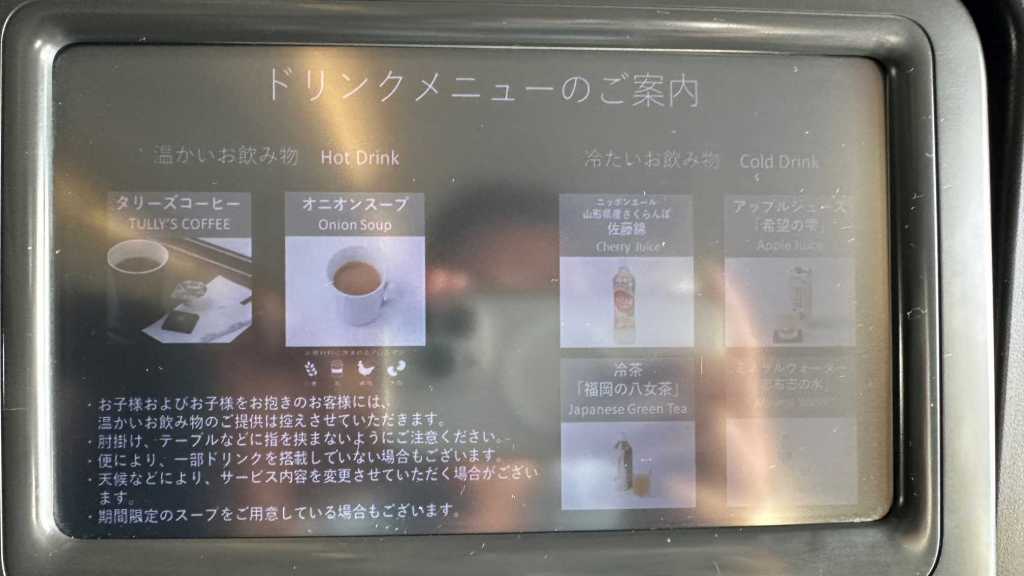
Once we have gotten up in the air, we were offered 2 hot drinks or 4 cold drinks options, I chose the cherry juice given that it sounded rather unique and I was fascinated by it, but it definitely was not a taste I expected nor think is palatable, but maybe some people might find it different.
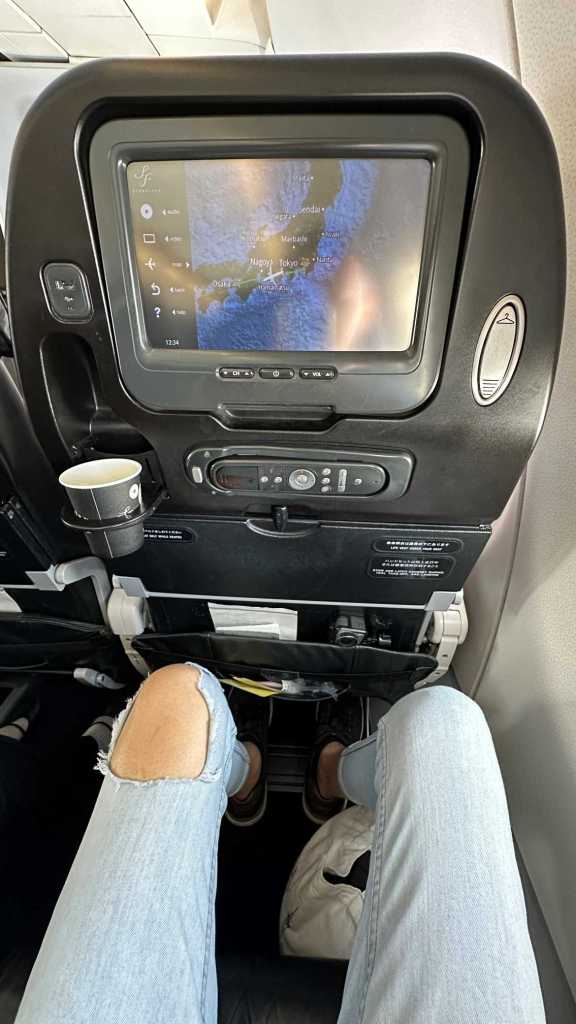
As this aircraft is fitted with only 150 seats, the seat pitch was excellent, the seat came with a leg rest but the padding was on the firmer side. This kind of reminds of me when I took the front first few rows on board Air New Zealand domestic A320 as those are reserved for elite members and they do offer better legroom.
As we headed south, I was able to catch a glimpse of Mt Fuji, and the reason I chose to sit on the right side as I wanted a glimpse of Mt Fuji, while it was slightly cloudy I was still able to get a good look. This is the first time I’ve seen it from the air, the other time I was on board the Shinkansen and had a few seconds of a view so it was definitely much better and unobstructed.
For the IFE, there are 12 channels which seems like Live TV, but I’m not entirely sure, there are also 8 audio channels. The flight map is static so it wasn’t anything too exciting.
CONCLUSION
For a short domestic hop, which Japan isn’t particularly big and most flights would be within the 2 hour timeframe, what Star Flyer is offering would be a very comfortable journey to get from A to B. As long as you are not expecting anything super fancy, they will be an airline that satisfy the masses, which I believe comes down to the seating comfort.
They do not have a large offering for their drinks selection, but again for a short flight I do not particularly mind too much, but I would appreciate it if they offer or change the variety from time to time.
The crew were friendly but lack the communication skill in English, which I do understand is not a priority as they serve mostly the domestic market and their clientele are probably mostly people looking to commute up and down the country.
Their IFE system is fairly outdated and lack offering for foreigners, which is something they can definitely work on. As they have different variations of IFE systems based on the age of the aircfaft, they may have something different on their other IFE system, but at least for the one I was on, it is only catered to the Japanese audience, and my mind cannot recall but I am fairly certain headphone wasn’t provided for the IFE so for those wanting to enjoy the entertainment might want to carry their own.
FARE
I booked through ANA as I needed to credit it to my Airpoints, I paid a cash fare of ¥10050 (NZD$112), which isn’t particularly cheap in my opinion but is quite average given that checked baggage has been included. For other mode of transportation such as the Shinkansen, the cost including airport transfer might end up being fairly similar and also the travel time might be lesser if taking into account of airport transit time and wait time. So if you want to not stress too much about flying, there are many options in Japan to suit your budget so it is worth looking into them before booking to fly domestically.
Check in
IFE
Food & Beverages
Service
Wear & Tear / Maintenance
Value for money

 PackJetRoam
Leave a comment